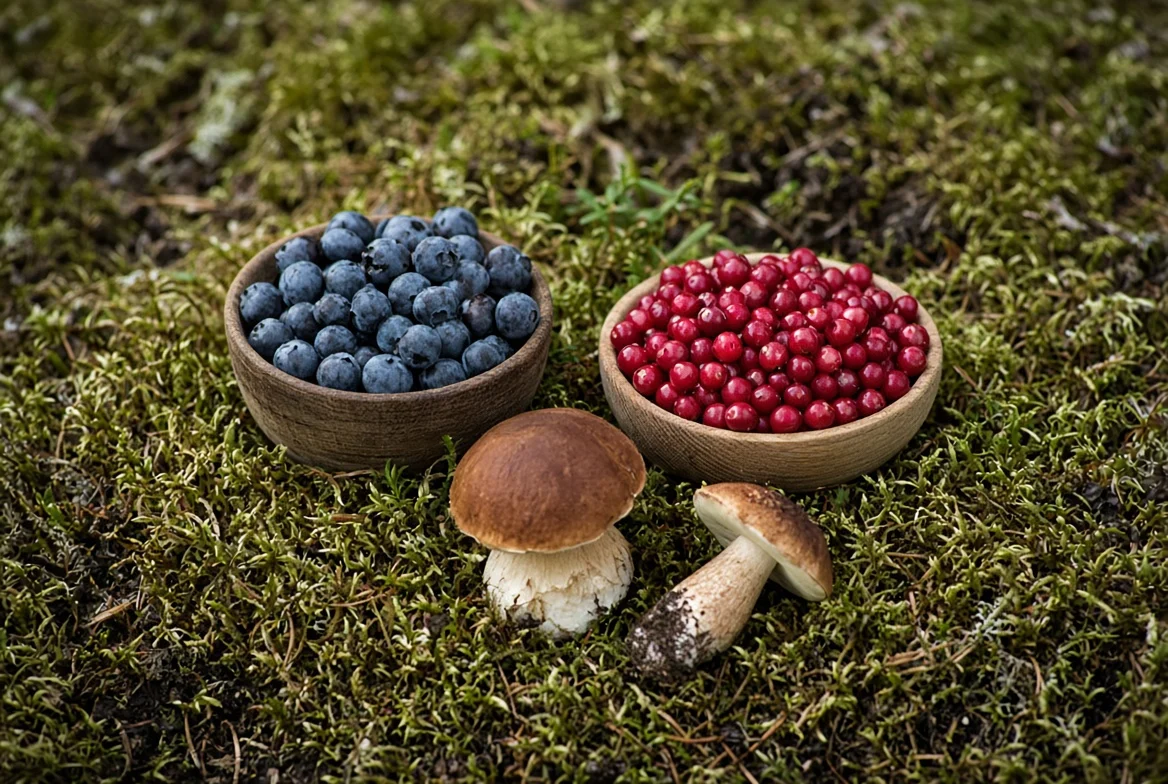
Mushrooms and forest fruits, 2024 reference year. Published indicative values of EUR 199.89 + 90.80 million, converted at the study’s reference rate of CZK 25/EUR rather than the exact annual Czech National Bank rate. Approximately CZK 7.27 billion; not turnover or net income.
Czech quota survey, 27 November–3 December 2025, CAPI, N = 1,000 adults aged 18+. Each selected up to two personally most important benefits from the list. Shares use all respondents as the denominator and can overlap. The paper was published in October 2026.
Total roundwood removals and processed salvage felling in Czechia, 2015–2025.
Total removals in 2025 were 53.3% below their 2020 level. Salvage felling accounted for 31.6% of the total.
million m³ under bark
2025
16.7million m³ in total
Salvage felling million m³ of total removals
Other removals million m³
1 tile = 100,000 m³ under barkFull grid: million m³
Salvage felling is processed wood from dead, uprooted, diseased or damaged trees. Other removals = total − salvage. Tiles show wood volume, not tree counts; the unfilled area is the remaining space on the shared scale.
Total removals include salvage felling. Total is the sum of coniferous and broadleaved removals, measured under bark and including self-production. Salvage covers processed dead, uprooted, diseased or damaged trees from multiple biotic and abiotic causes. These two series overlap and must not be summed. Conversion from m³ and thousand m³ to million m³ and percentage changes: calculations by NTFP.eu.
The Czech Statistical Office records planting/sowing, including repeated planting, underplanting and supplementation, separately from natural regeneration. The chart shows the annual recorded area of regeneration activities, not net forest-area growth. Areas are displayed to whole hectares. The 2025 natural-regeneration share of 30.6% is calculated from unrounded source data, using the combined recorded area of planting, sowing and natural regeneration as the denominator.
Pooled 2021–2025 surveys, N=5,025. Table 7 uses structural averages for the 2024 reference-year valuation. Self-reported household quantities, not averages per active collector. Fruit species are components of the fruit aggregate and must not be added to it again.
Repeated cross-sectional population surveys: Czechia N=5,026; Slovakia N=5,129. Average shares for 2020–2024; not a fixed panel or an estimated causal effect of nationality.
Czech quota CAWI survey by STEM/MARK, November–December 2023, N = 1,000 adults aged 18+. Shares use all respondents as the denominator and indicate any use. Medicinal use comes from a separate yes/no question; culinary use combines all positive seasonal-consumption frequencies. The groups can overlap. These values measure herb use, not foraging participation.
N=1,000 respondents; self-reported reasons. Multiple responses were possible; percentages do not sum to 100. These are perceived barriers, not measured effects of removing them.
Czech quota survey, 27 November–3 December 2025, CAPI, N = 1,000 adults aged 18+. One response to agreement with state financial support for forest owners providing public benefits. Total support = fully + rather agree (29.9 + 45.4 = 75.3%). This is policy support; the question did not elicit willingness-to-pay amounts.
Official data: Czech Statistical Office, Forestry 2025 (published 29 May 2026). Charts and calculations: NTFP.eu. Reuse terms · CC BY 4.0 ↗
03 / YOUR HARVEST AND FOREST VISITS
What does the forest give you each year?
Explore the value of your forest harvest. Start with the study figures, then adjust quantities and prices to your own experience. Record forest visits separately.
❋
INDICATIVE PRODUCT VALUE
Reference model: both quantities and prices come from the study.
Mushrooms gathered1 093 CZK
Forest fruits gathered496 CZK
Wild herbs—
Game meat obtained for food—
SEPARATELY: FOREST VISITS
The calculation adds quantity × price for each product. It gives an indicative gross food value before costs, time and any purchase expenditure. Actual savings also depend on what the household would otherwise have bought.
Riedl, Němec, Jarský and Sloup (2026), Forests 17(7), 802, Table 7: mean annual collection of 4.690 kg of mushrooms and 2.139 kg of forest fruits per household. Quantities use pooled 2021–2025 surveys (N = 5,025), including households reporting zero collection.
The 2024 reference prices are EUR 9.32/kg for mushrooms and EUR 9.28/kg for the aggregate forest-fruit category. The study’s reference conversion of CZK 25/EUR (section 2.4) gives CZK 233 and CZK 232/kg. These are historical reference values; your own price can reflect the species, quality, location and year. The combined forest-fruit price represents the study’s product mix.
The starting monetary result is an editorial calculation using the table’s rounded figures: 4.690 × 233 + 2.139 × 232 = CZK 1,589.018, displayed to whole crowns. Edited inputs form your own scenario. Each food is counted once; forest fruits form one combined category. Visits are displayed separately per person per year. The calculator values the foods entered, not the forest’s total societal value, income, health effects or conservation value.
In a Czech survey, 43.2% of women and 26.3% of men thought game meat should cost more than other meat. A study by Martin Němec and colleagues revealed a difference in price expectations alongside a shared view: most respondents in both groups thought it should cost the same.
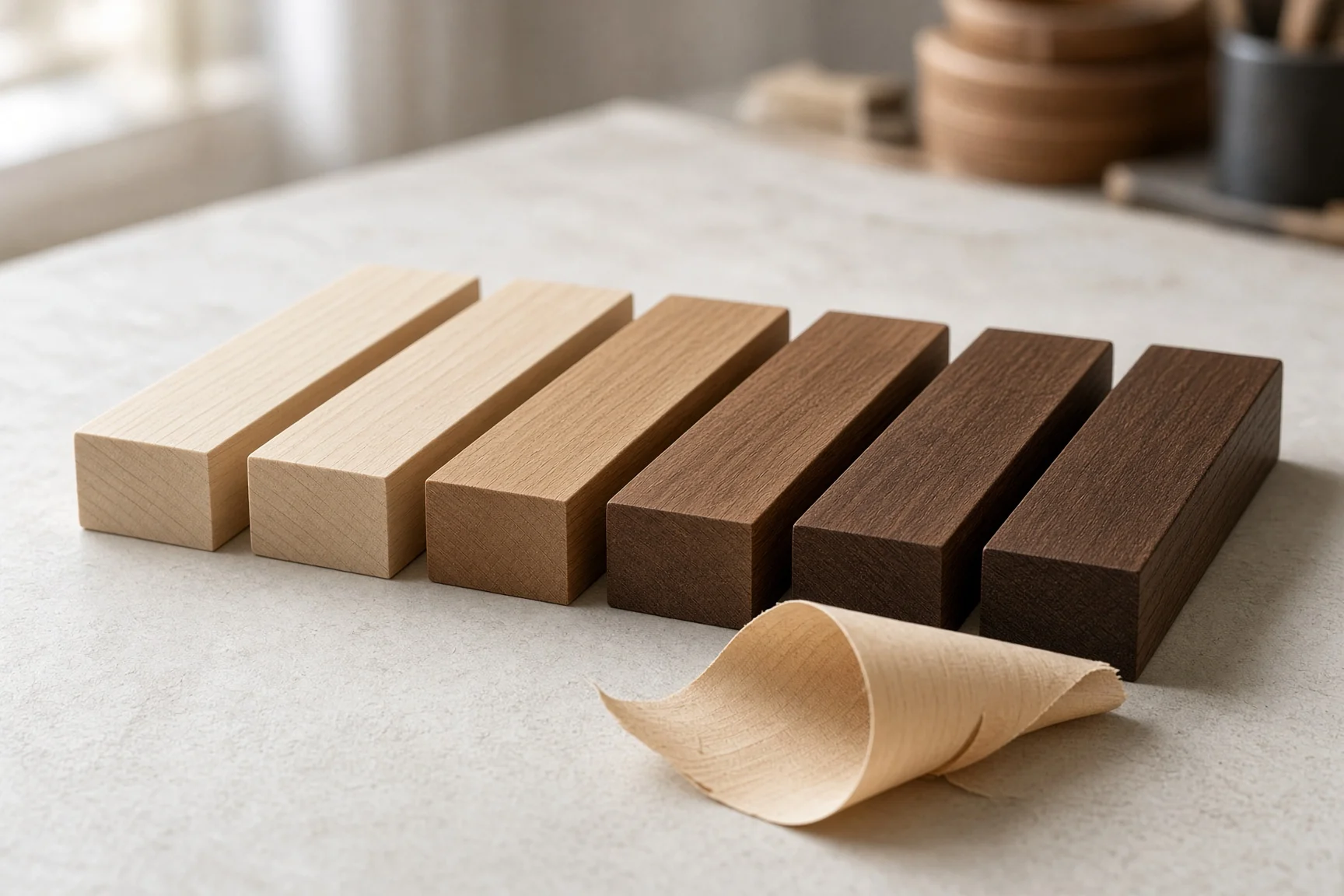
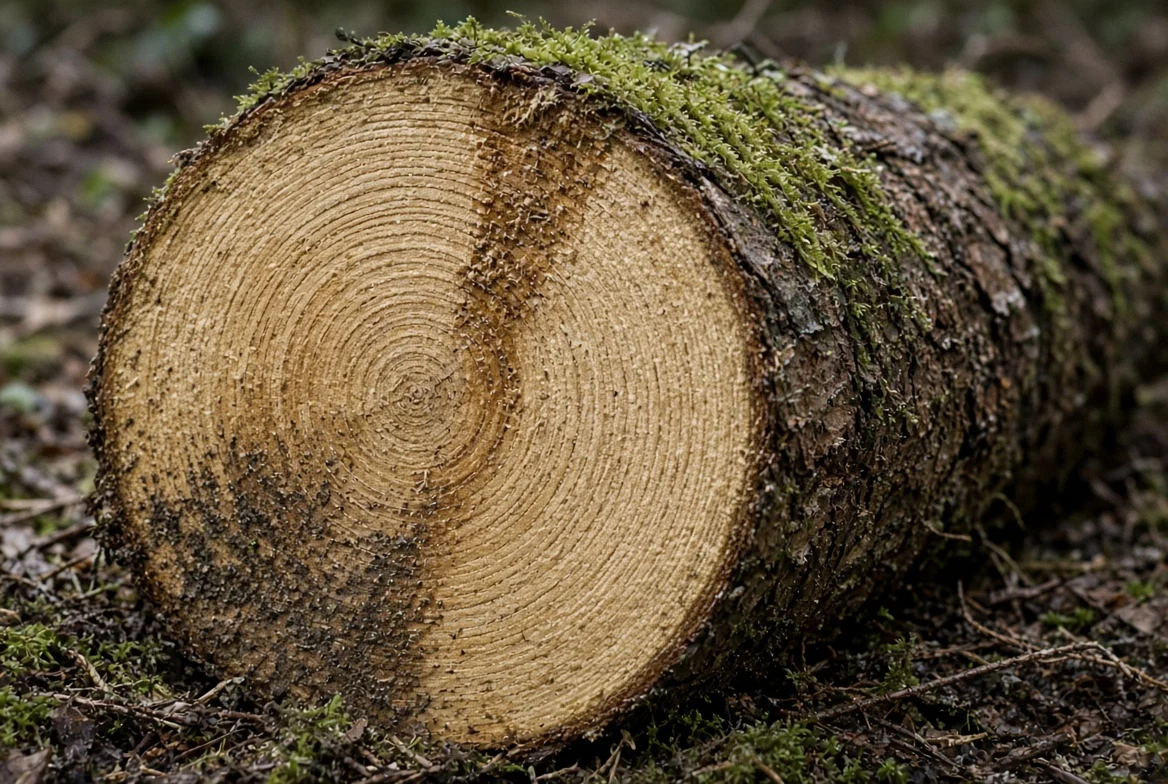
Pale birch wood can turn a rich brown through heat treatment. Researchers at the Czech University of Life Sciences Prague measured the change and asked people to assess samples while imagining a furniture purchase. Participants learned which tree species they were looking at only after completing the questionnaire.
Around 340 to 343 cubic metres of living timber per hectare. That was the narrow range of adjusted estimates across three Czech forest groups classified by conservation designation. No statistically significant difference in standing volume was detected. Clearer differences emerged in broadleaf representation and standing deadwood occurrence.
Between 2015 and 2024, recorded forest land expanded by 14,746 hectares while standing timber volume fell by 13.2 million cubic metres. Two figures from the Czech forestry reports offer different perspectives on a changing forest.
Austria received nearly 64% of Czech raw timber exports by volume in 2024; China accounted for 2.2%. The Forestry Green Report maps strong links with neighbouring countries and substantial imports into Czechia.
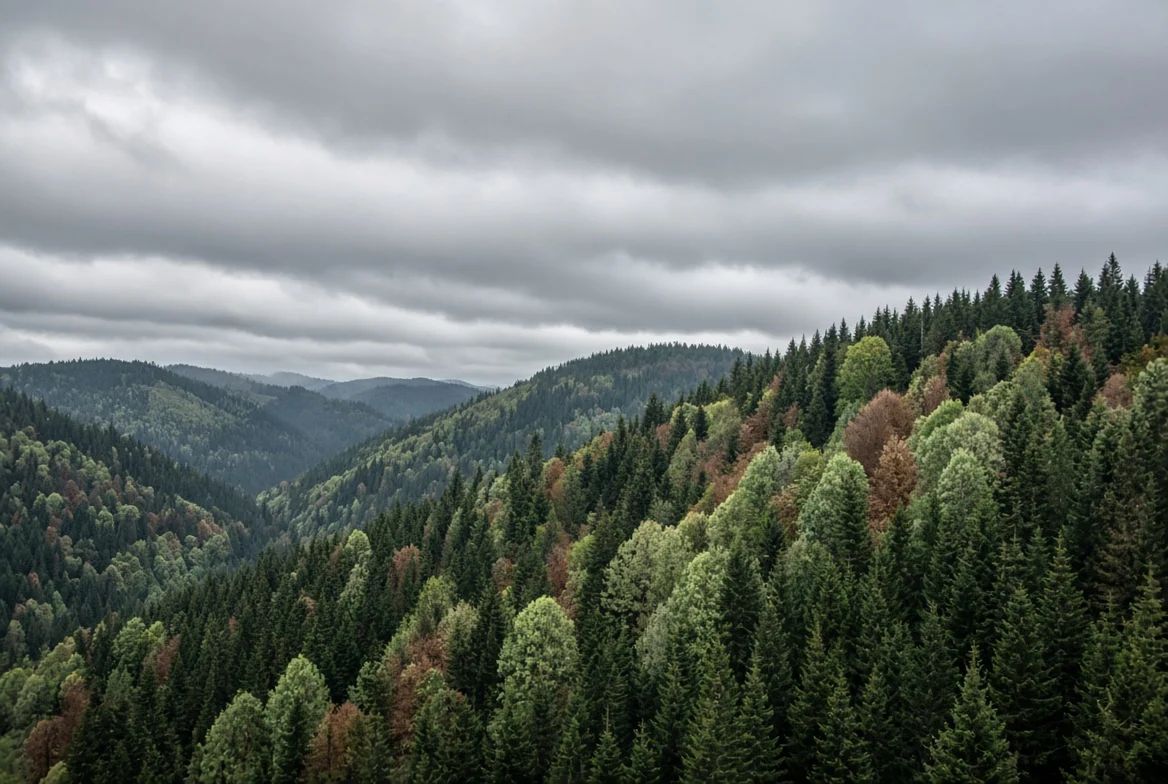
Between 2015 and 2024, the recorded area of broadleaved trees increased by 111,665 hectares, while Norway spruce lost 134,201 hectares. The Czech forestry reports reveal a gradual change in the composition of the country's forests.
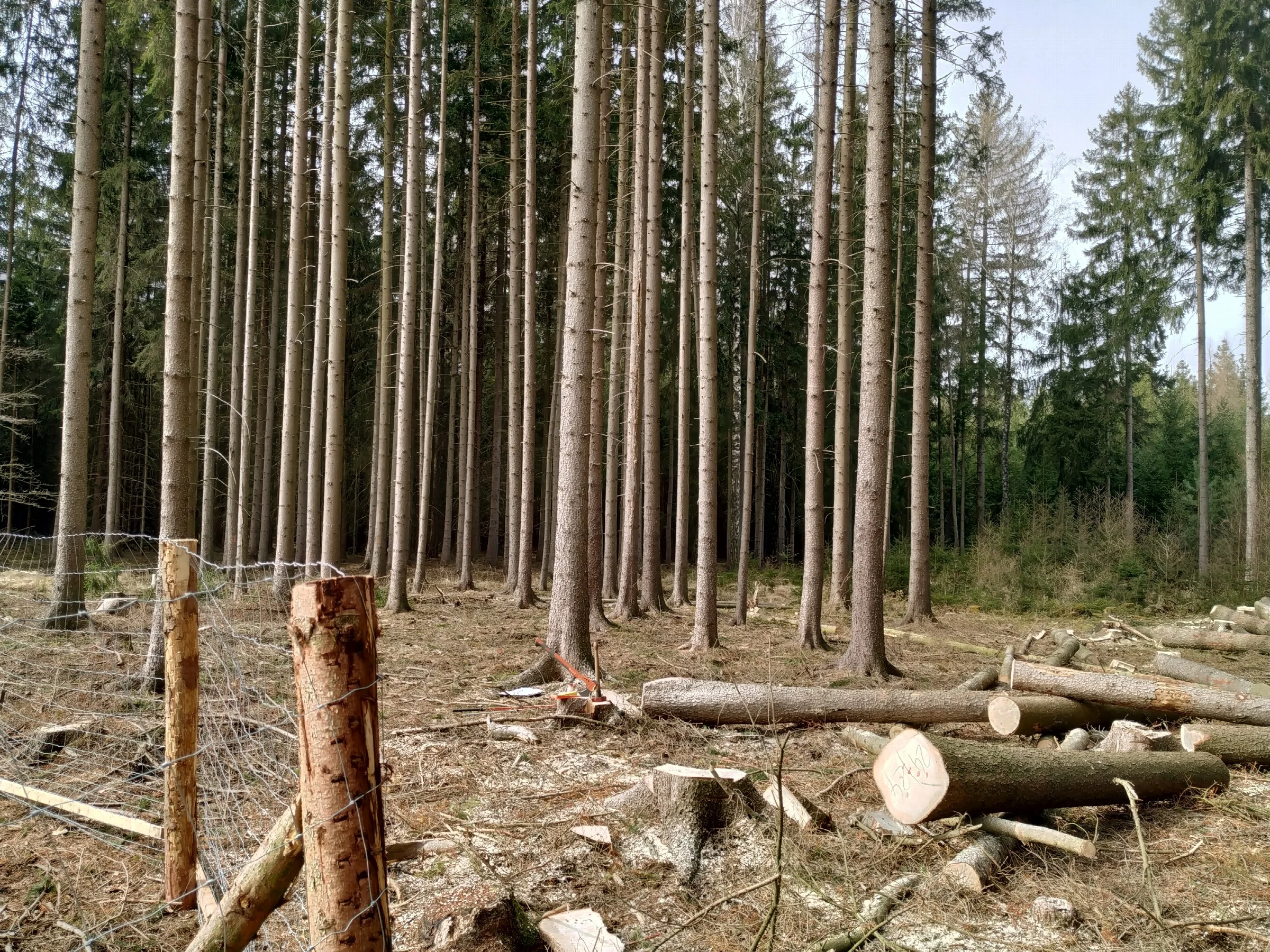
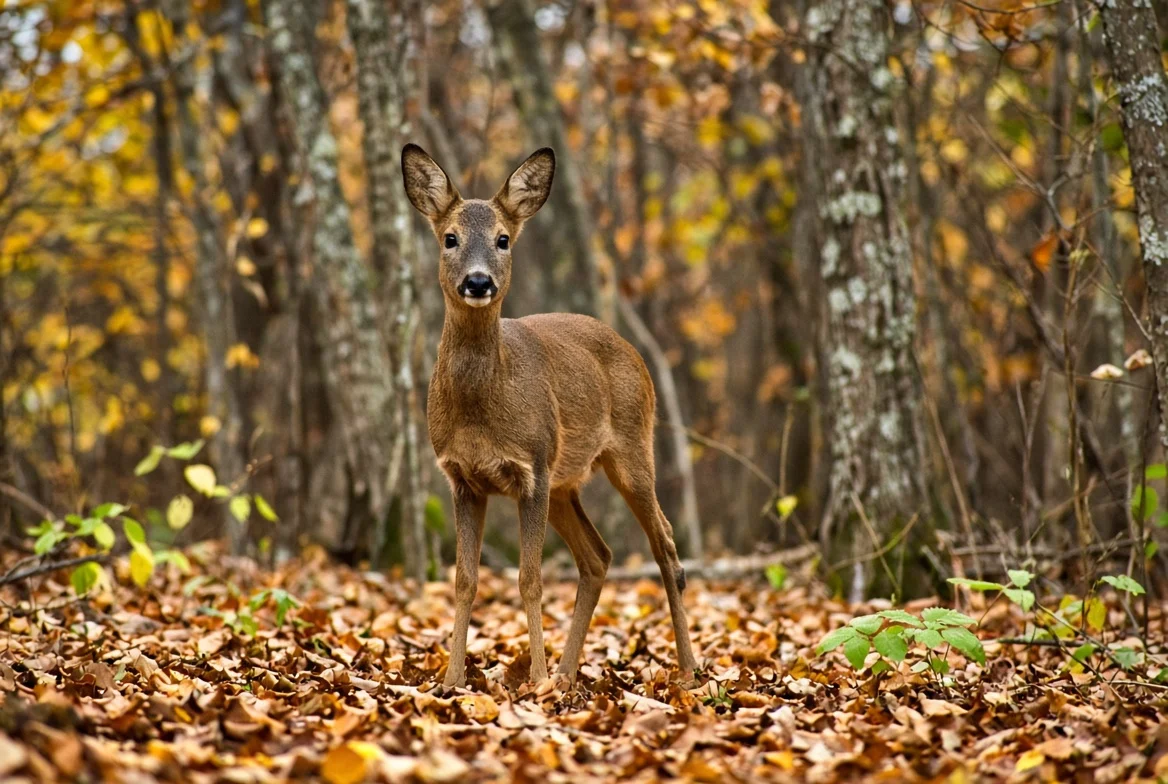
A fence beside a forest track has a financial story. The Green Report for 2024 records CZK 244 million in support for 3,486 kilometres of protective fencing. Looking through the wire connects wildlife, young trees and forest regeneration.
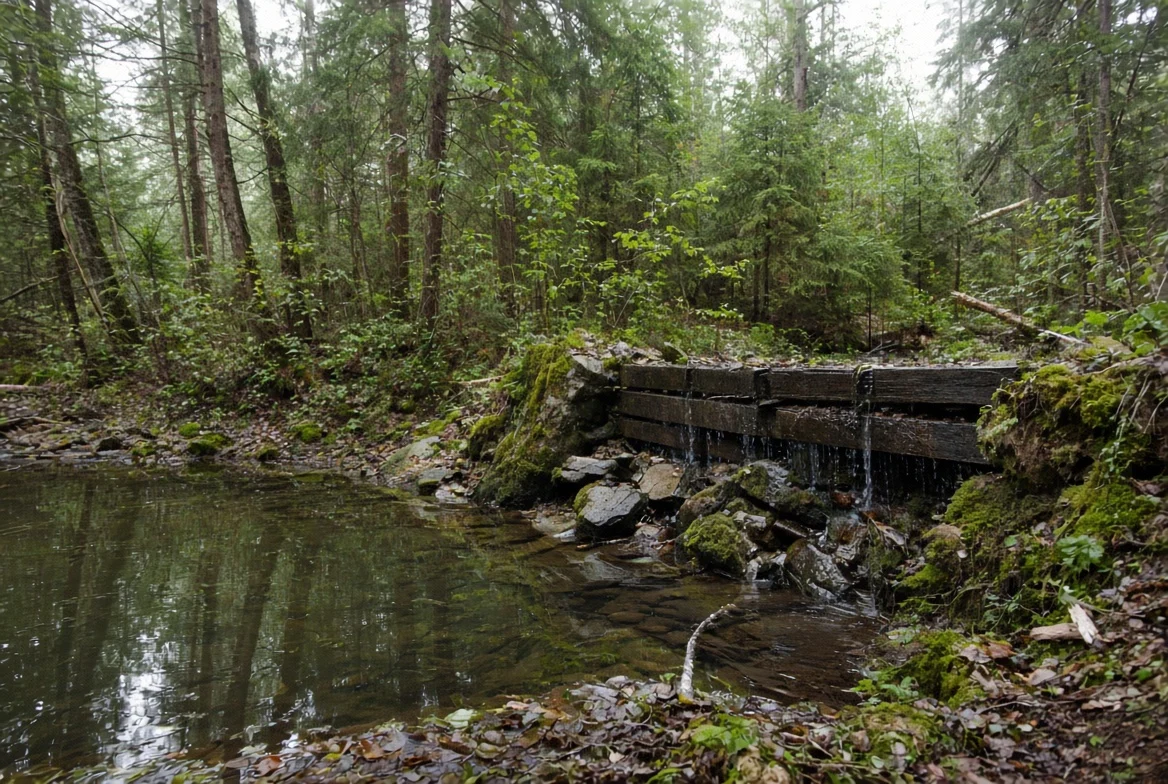
Streams, reservoirs and flood repairs have a place in the forest accounts. Ten Green Reports reveal CZK 6.316 billion in water management expenditure by Forests of the Czech Republic and how the work was financed.
A survey of 1,500 adults examined how perceptions of medicinal plant availability relate to climate change and excessive chemical use. A separate part described management measures reported by 53 forest owners.
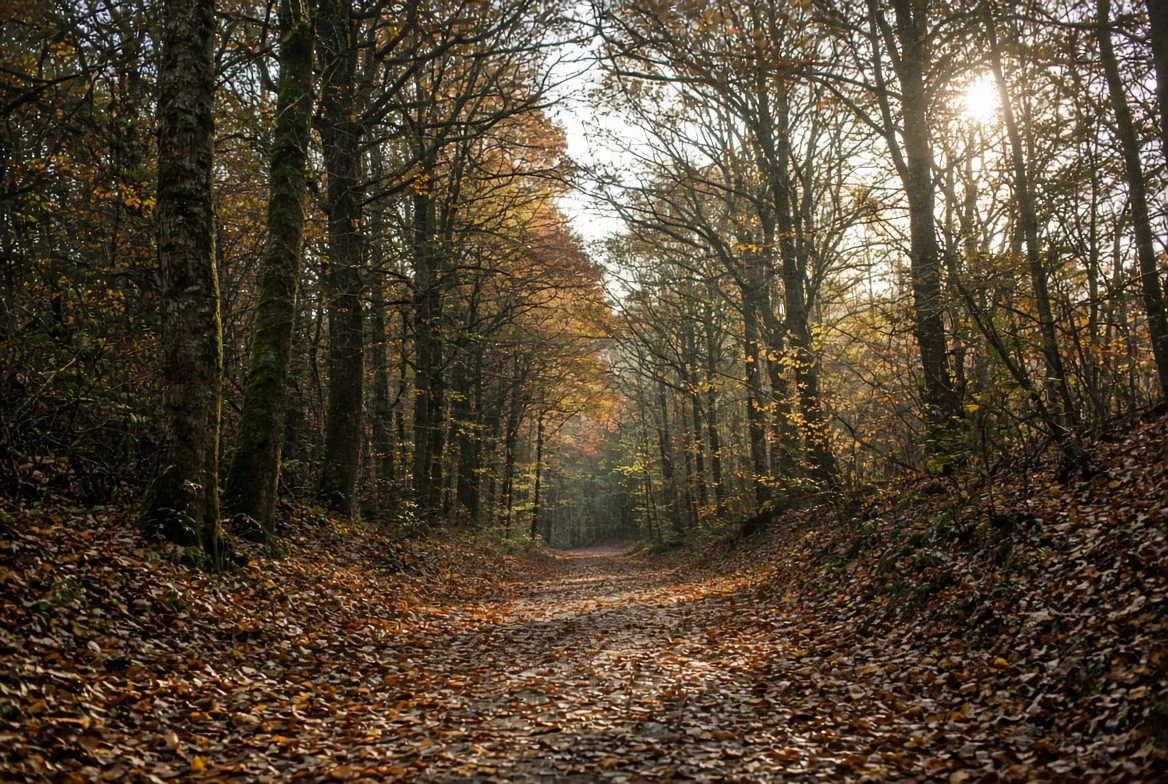
Maintained paths, benches and waste collection all have a cost. A study of the municipal forests of Hradec Králové shows how recreation was funded in 2013–2019 and why the enterprise’s other sources of income matter.
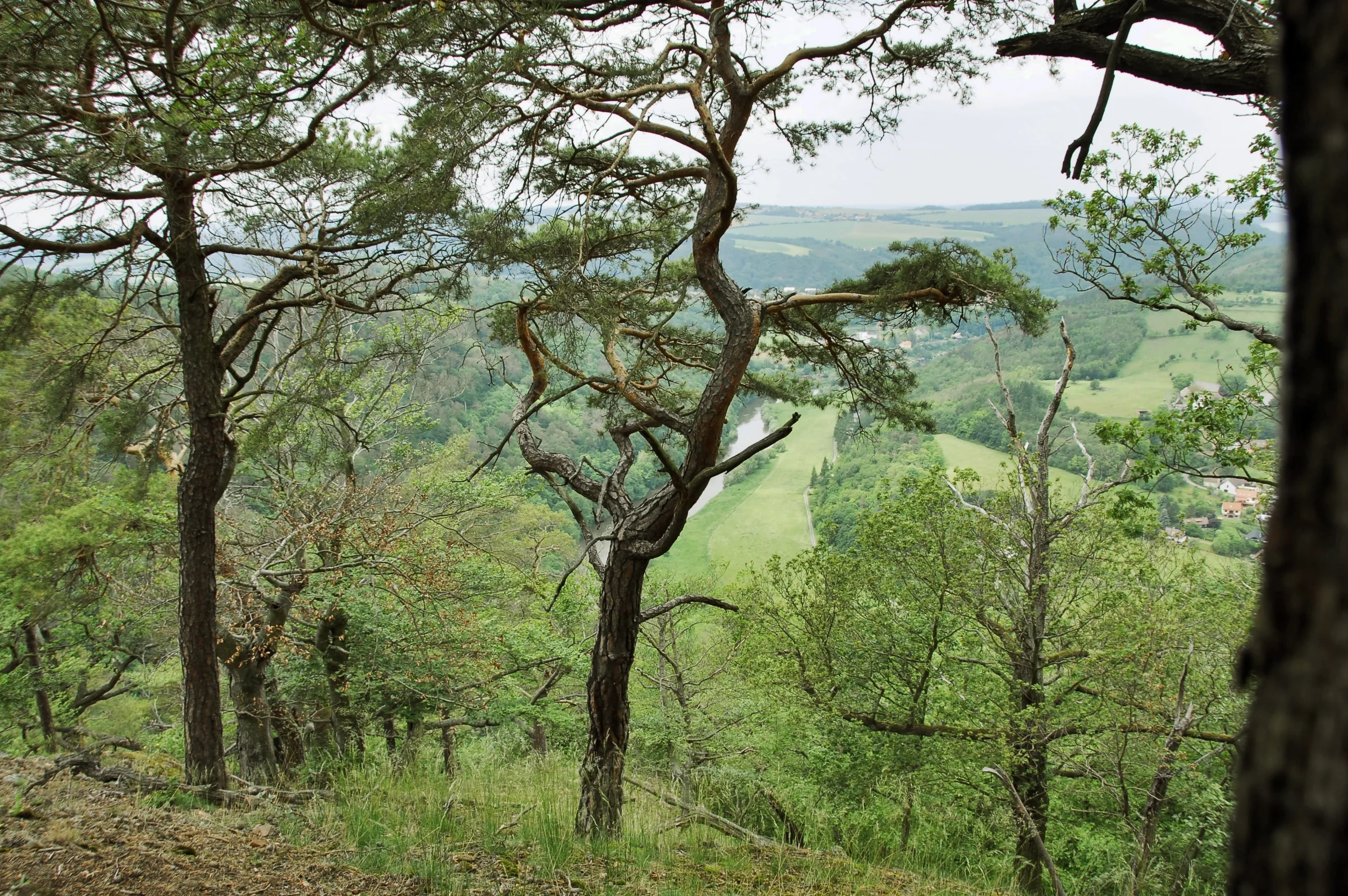
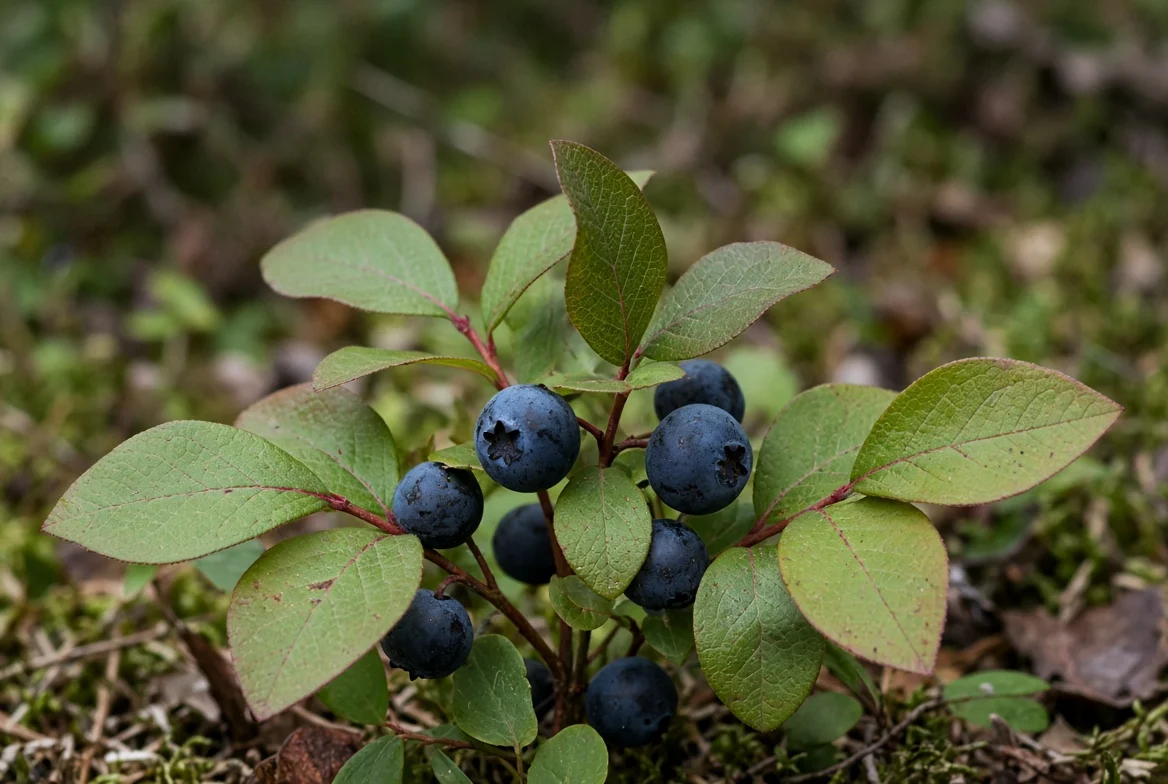
A basket of wild bilberries reflects both the summer and the forest around it. Marcel Riedl and colleagues linked Czech picking totals for 1994–2018 with June rainfall, July temperature and salvage felling.
Relaxation, clean air and water retention led the priorities of Czech respondents. Riedl, Němec and colleagues connect public expectations with practical forest planning.
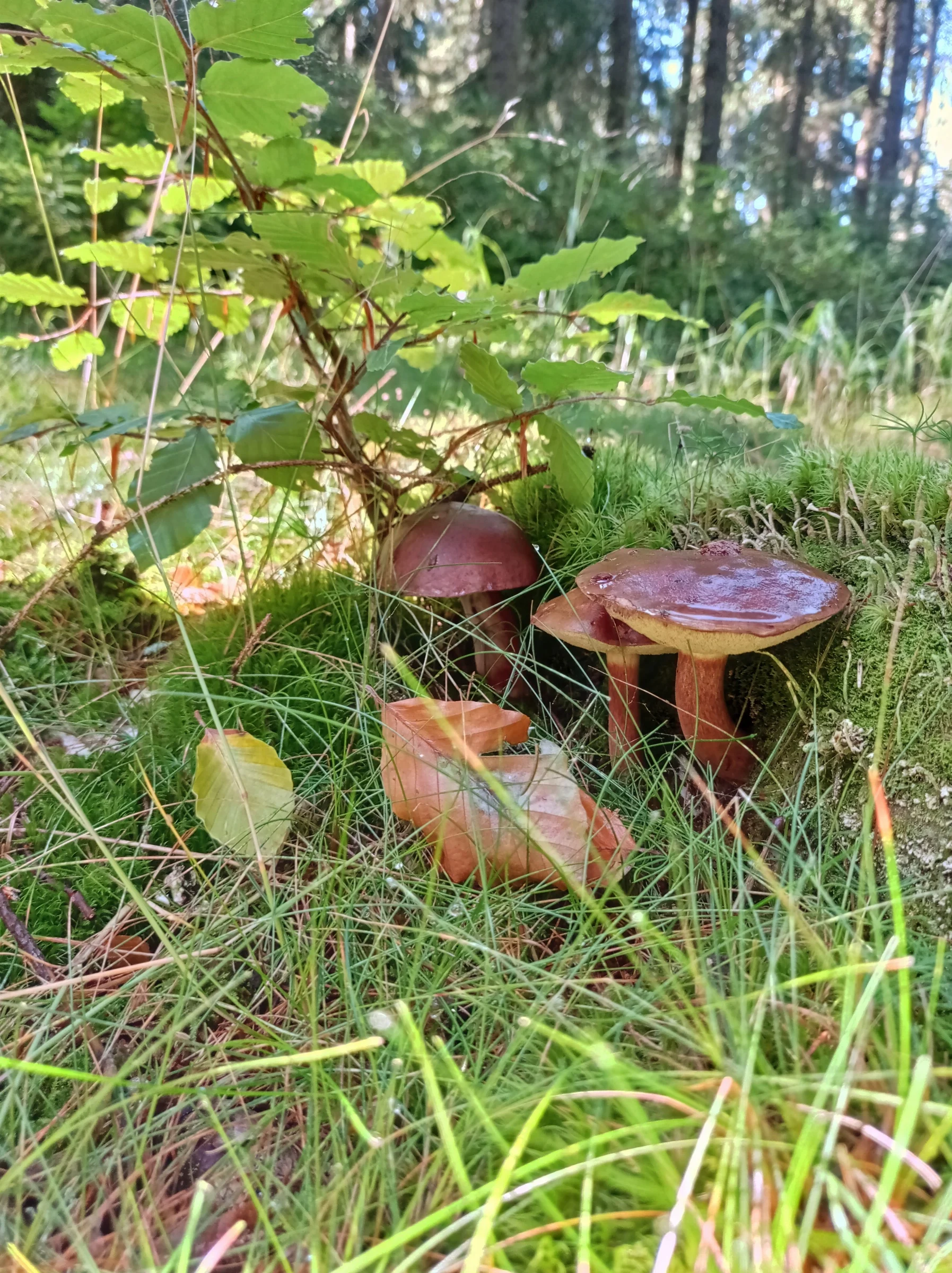
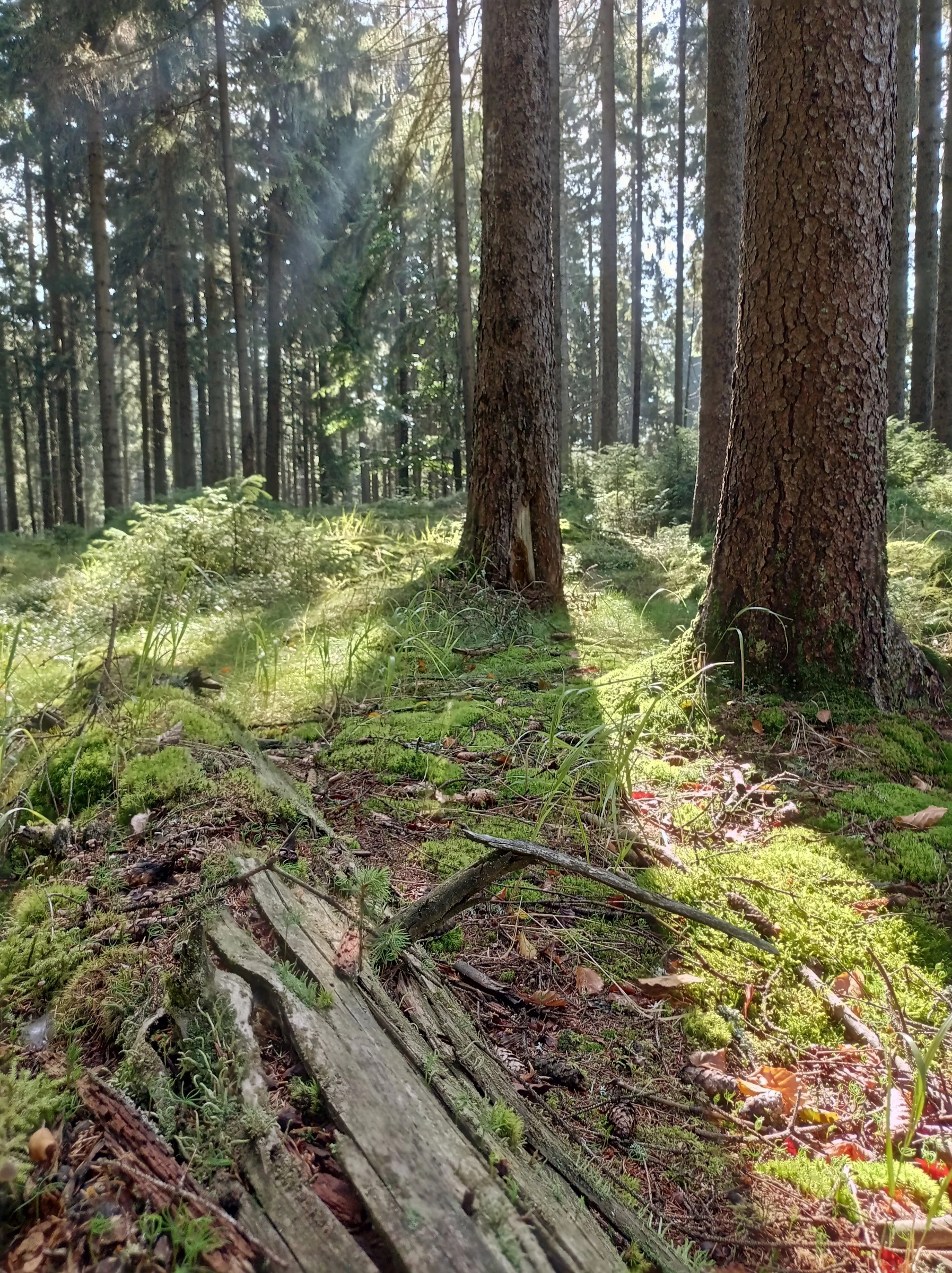
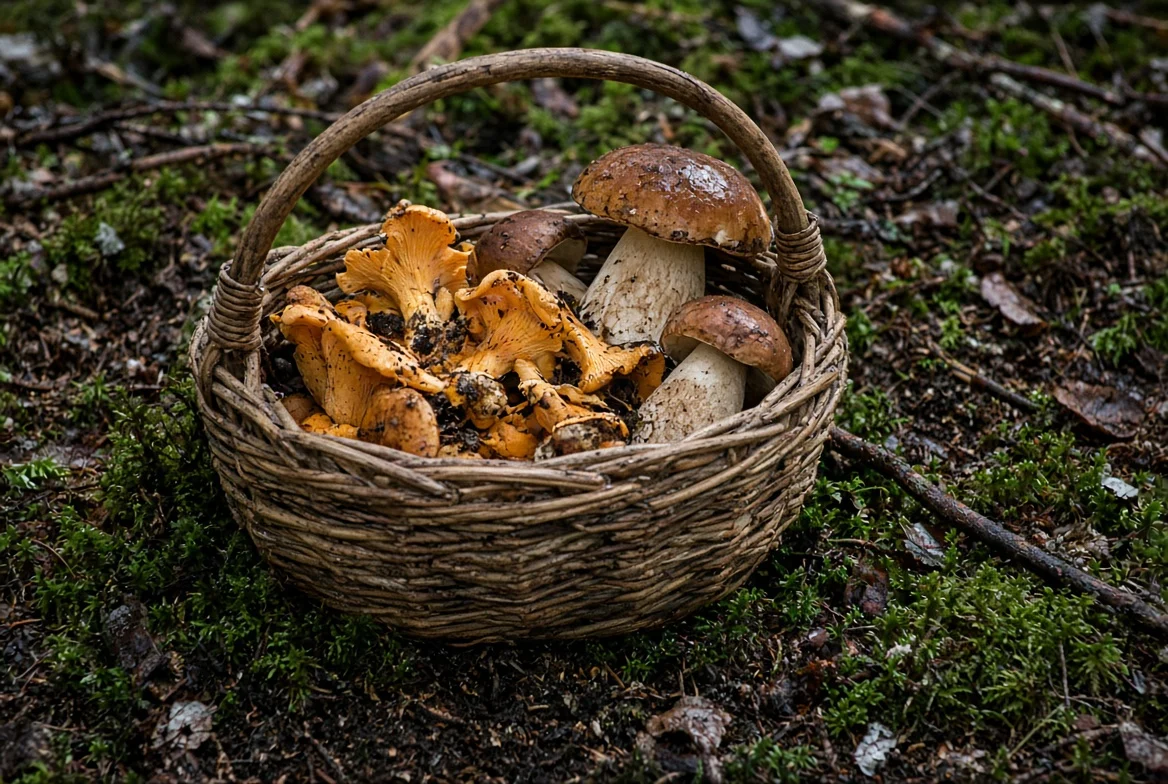
A basket of mushrooms, water soaking into the soil and a walk in the shade reveal different forest benefits. This introduction to ecosystem services connects everyday experience with research on Czech households and public perceptions.
Agreement that game meat is environmentally friendly fell from 75.3% to 67.9%, while definite agreement rose slightly. Two Czech surveys show why the distribution of responses matters when assessing consumer attitudes.
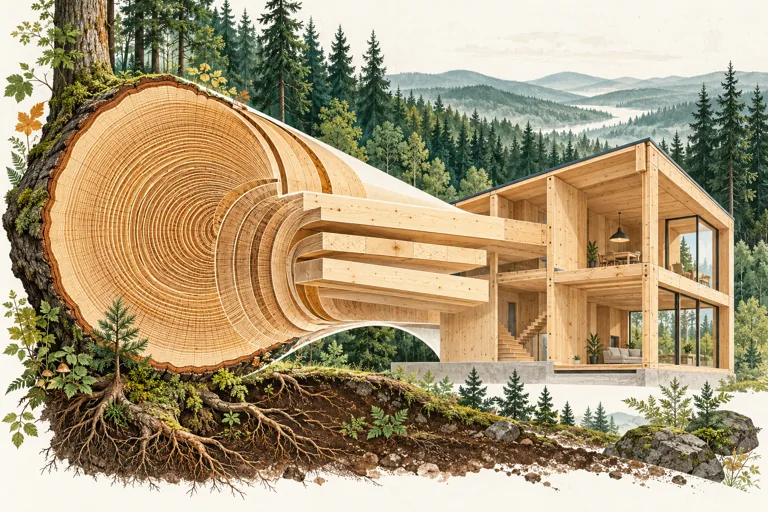
Positive attitudes towards timber housing were reported by 57.1% of empty nest respondents and 37.3% of students. The MML 2024 survey also reveals differences in the priority given to construction speed, energy efficiency, appearance and sustainability.
The share visiting a forest at least monthly rose from 56.7% to 70.5%. More households gathered mushrooms, while the average harvest per gathering household fell. National surveys are complemented by local visitor counts.
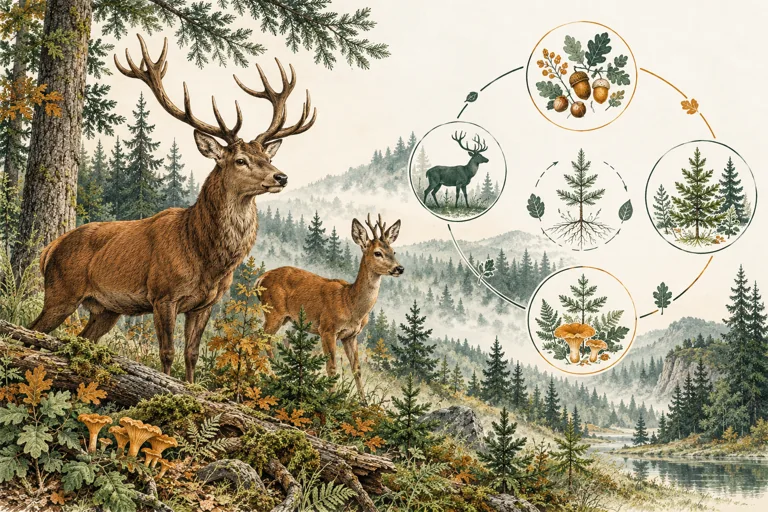
Undisturbed wildlife received 85% agreement, comfortable resting places 71%. A 2018 survey also found equal agreement for the presence of large predators and for keeping branches and cut timber clear of the woodland: 61%.
The value of gathered mushrooms and forest fruits was strongly concentrated in Czech surveys. About 4.5% of respondents accounted for 39.7% of the value reported for their entire households. The half reporting occasional small harvests accounted for just 4.99%.
Czech surveys from 2021–2025 indicate that approximately 37.2% of respondents reported both household forest-fruit collection and purchase. Gathering and purchasing complement each other in this food category. Mushrooms have a stronger self-provisioning profile.
Surveys from 2020–2024 reveal substantial differences in forest visitation and gathering. Participation is more widespread in Czechia, while active Slovak gatherers report larger annual quantities of mushrooms and forest fruits per person.
Wood was considered suitable for single-storey buildings by 61% of respondents, compared with 13.13% for buildings of five or more storeys. Czech surveys show how attitudes to the material differ from assessments of specific uses.
Medicinal forest-herb use was reported by 36.4% of respondents, compared with 25.1% for culinary use. Separating the two purposes also reveals different associations with age and gender.
The quantity of mushrooms and forest berries gathered by Czech households varies sharply from year to year. The 1994–2023 series nevertheless shows a broadly stable long-term level and an estimated value of billions of crowns.
Game meat’s festive character was cited as a reason for limited consumption by 67.6% of respondents, compared with 30.3% citing price. A 2022 Czech survey also records low repeated consumption and a prominent role for personal contacts in obtaining it.
For the 2024 reference year, a study estimates Czech household collection at 21,447 tonnes of mushrooms and 9,781 tonnes of forest fruits. Their combined indicative value reaches EUR 290.69 million, quantifying a substantial source of household food provision.
Riedl, M., Němec, M., Jarský, V., & Sloup, R. (2026). Supply, Trade and Consumption of Major Forest Foods in Czechia: Mushrooms, Forest Fruits and Game Meat. Forests, 17(7), 802. https://doi.org/10.3390/f17070802
Němec, M., Riedl, M., & Jarský, V. (2026). Forest access does not equal food access: institutional and household pathways to wild foods in Czechia. Frontiers in Sustainable Food Systems, 10, 1880811. https://doi.org/10.3389/fsufs.2026.1880811
Purwestri, R. C., Riedl, M., Němec, M., Jarský, V., Hájek, M., & Dudík, R. (2026). Wild Herb Foraging and Sustainable Development: Links Between Ecosystem Services, Cultural Practices, and Well-Being in Czech Forest Landscapes. Sustainable Development. https://doi.org/10.1002/sd.71022
This portal explains research on forest ecosystem services and economics at the Faculty of Forestry and Wood Sciences, Czech University of Life Sciences Prague. It connects everyday experience with original scientific studies.
Co-author of the featured studies RNDr. Marcel Riedl, CSc.