A RESEARCH STORY · 3 MIN READ
Broadleaves gained 112,000 hectares. Czech forests are changing
Between 2015 and 2024, the recorded area of broadleaved trees increased by 111,665 hectares, while Norway spruce lost 134,201 hectares. The Czech forestry reports reveal a gradual change in the composition of the country's forests.
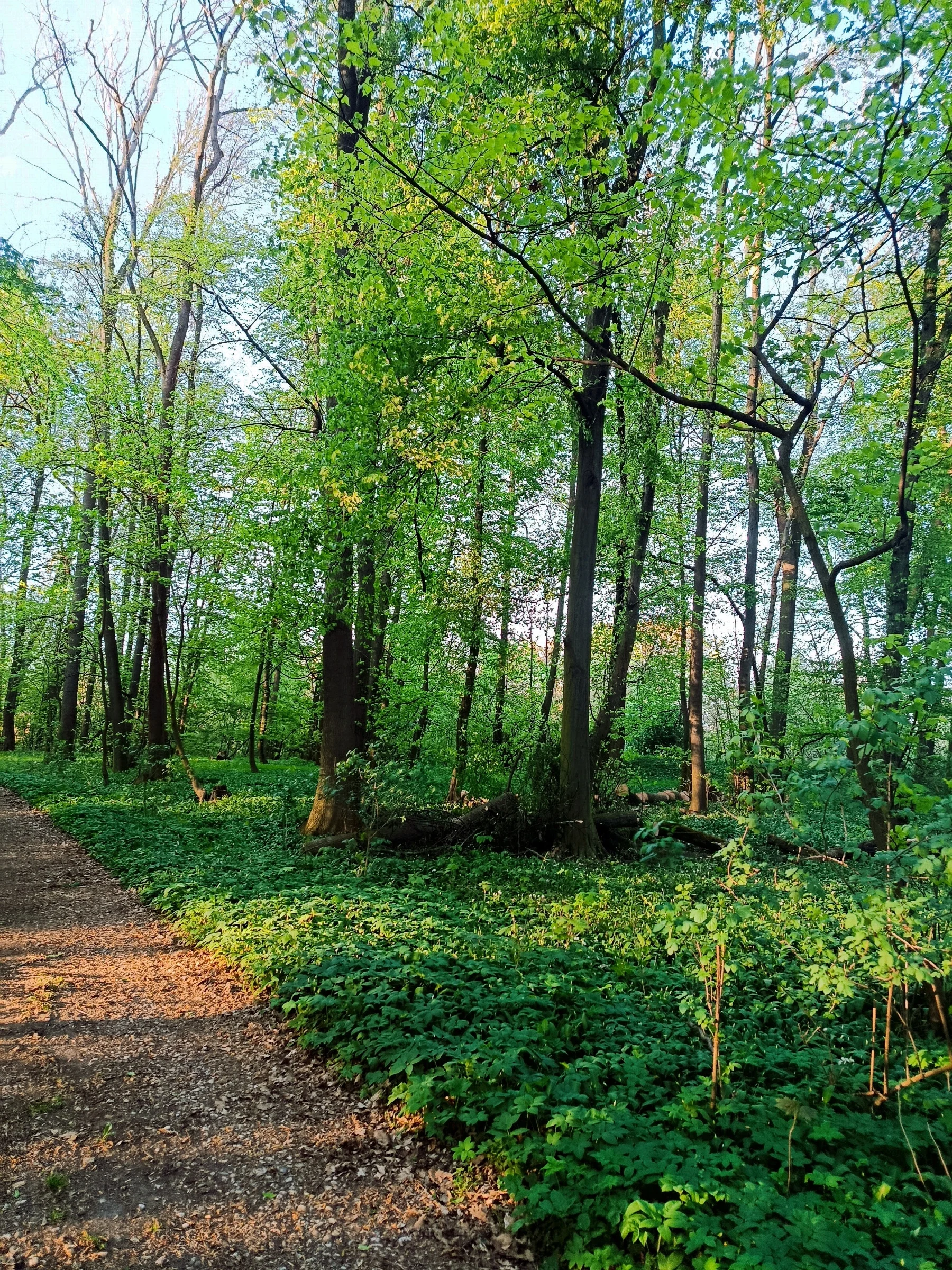
On an autumn walk, a glance upwards reveals several kinds of forest at once. Beech crowns change colour, oaks hold their leaves and spruce remains green between them. Individual trees are easy to notice. Adding their recorded areas across the country reveals the scale of a much broader change.
Between 2015 and 2024, the area assigned to broadleaved species in the Czech forestry reports increased from 687,882 to 799,547 hectares. That is a gain of 111,665 hectares, or roughly 112,000. Relative to the initial broadleaved area, the increase was about 16.2%.
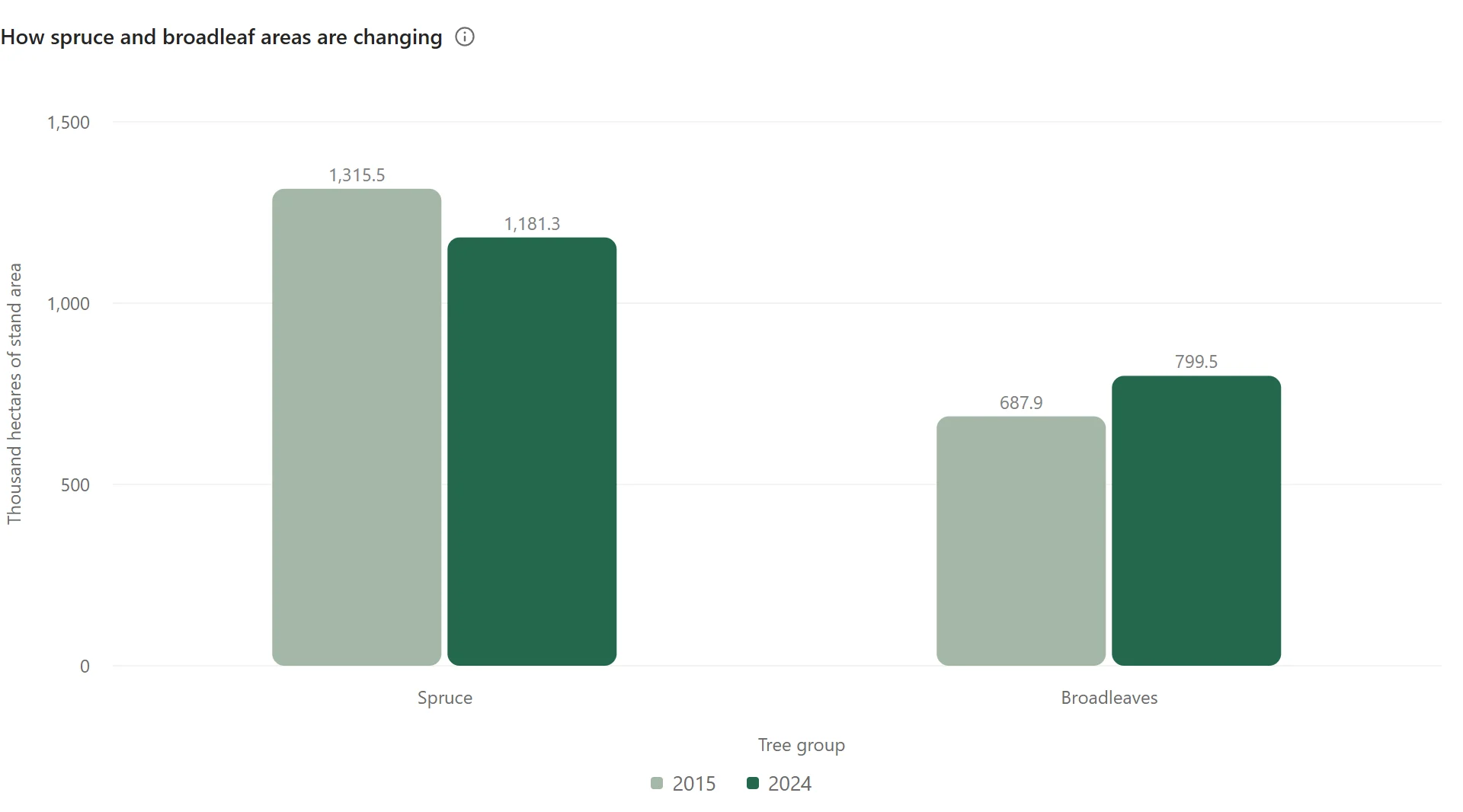
| Species group | 2015, ha | 2024, ha | Change, ha |
|---|---|---|---|
| Norway spruce | 1 315 487 | 1 181 286 | −134 201 |
| Broadleaved species | 687 882 | 799 547 | +111 665 |
A large change made of many small ones
The broadleaved share of total forest stand land rose from 26.5% to 30.5%, a gain of four percentage points. At the landscape level, such a shift is made up of many local changes. The national records bring them together across stands of different ages.
Beech accounted for a substantial part of the increase. Its recorded area grew from 211,835 hectares in 2015 to 262,057 in 2024, reaching a 10% share of stand land. Oak expanded from 185,044 to 209,780 hectares. Birch and other broadleaved species also contributed to the changing composition.
Norway spruce remains the most widespread individual tree species. Over the same period, its recorded area fell from 1,315,487 to 1,181,286 hectares, a reduction of 134,201 hectares. Its share declined from 50.6% to 45.1%. Alongside the continuing large presence of spruce, other species now occupy more space.
Existing forests and the next generation
Artificial regeneration provides a second perspective. It records areas regenerated through planting or sowing, including planting beneath an existing stand. Broadleaves accounted for 44.7% of this area in 2024, compared with 38.5% in 2015.
The annual pattern has varied. The broadleaved share of artificial regeneration reached 51.3% in 2020, stood at 47.3% in 2023 and was 44.7% the following year. These figures describe the composition of the areas being regenerated in a particular year. The overall species composition reflects the development and management of stands over many decades.
The long rhythm of a forest
Together, the two perspectives show Czech forests as a landscape of several generations. Much of today's forest consists of trees that began growing long before the period considered here. Current regeneration adds another generation with its own species composition.
On the next woodland walk, the young trees beside the path and beneath the canopy deserve a closer look. National figures give those small trees a wider context. Between the recorded states of 2015 and 2024, broadleaves gained more than 111,000 hectares of species area. The changing composition of Czech forests already has a measurable scale.
Sources and data
Species areas and shares come from the administrative forestry records of ÚHÚL/NLI. Percentages refer to total forest stand land, including temporarily unstocked areas; forest with unknown input data is excluded. Artificial regeneration figures originate from the Czech Statistical Office. Area differences and percentage-point changes are our calculations from the published tables.
- Ministry of Agriculture: Report on the State of Forests and Forestry in the Czech Republic in 2015, printed p. 45, Table 4.3.1.
- Ministry of Agriculture: Report on the State of Forests and Forestry in the Czech Republic in 2024, printed p. 57, Table 4.3.1; p. 26, Table 3.2.2. Reports are in Czech.
Related story: Forest ecosystem services.