A RESEARCH STORY · 4 MIN READ
Similar timber stocks, more broadleaves: what a Czech forest study revealed
Around 340 to 343 cubic metres of living timber per hectare. That was the narrow range of adjusted estimates across three Czech forest groups classified by conservation designation. No statistically significant difference in standing volume was detected. Clearer differences emerged in broadleaf representation and standing deadwood occurrence.
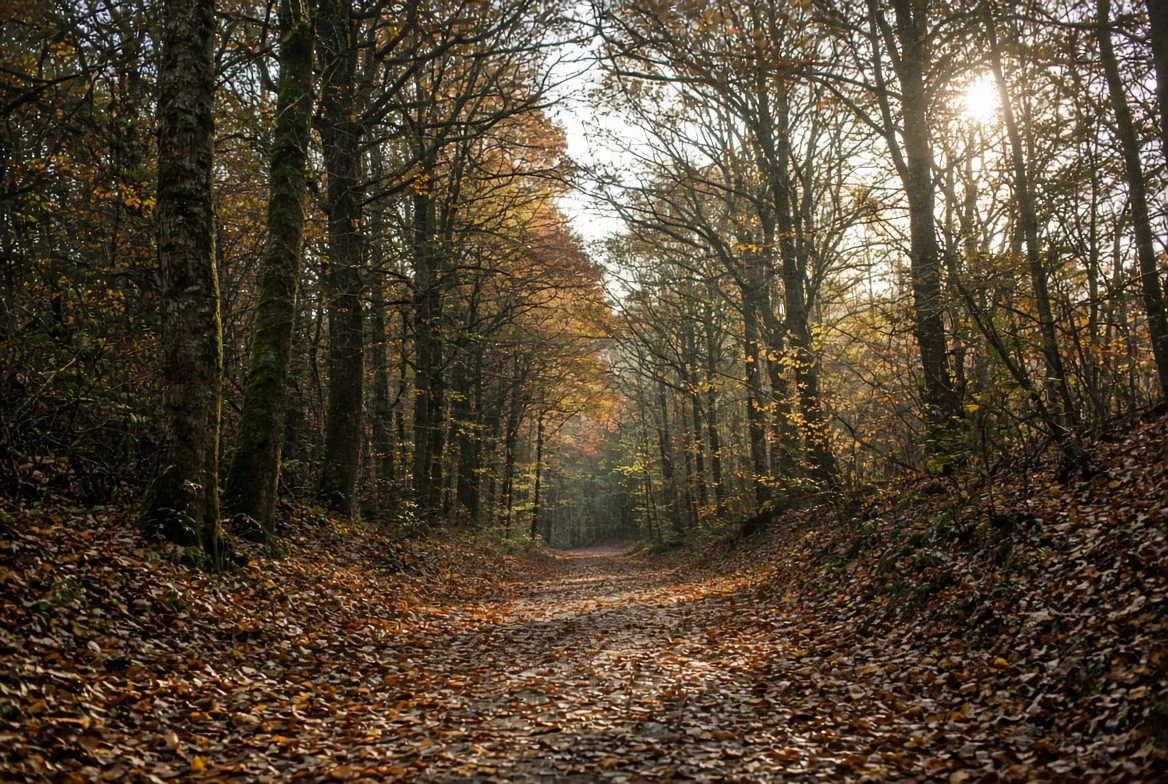
On a woodland walk, we notice a towering beech, slender spruces and a dead trunk beside the path. A forester adds another perspective: how much timber is standing on that patch of ground. Standing volume is often among the first figures used to describe a forest. A Czech study shows how much more the story reveals when we look at tree composition alongside cubic metres.
Three forest groups, surprisingly close estimates
Martin Němec, Roman Dudík and Roman Sloup of the Czech University of Life Sciences Prague analysed 5,530 selected plots from the second Czech National Forest Inventory, measured in 2011–2015. Using conservation designations, they compared three groups of forests: those outside the evaluated categories of specially protected areas (the reference group), those with a moderate level of nature protection, and those with strong nature protection associated with restrictions on management interventions. This classification expresses the presumed degree of management restriction arising from conservation measures. The group with strong nature protection included, for example, nature reserves and the first zones of protected landscape areas.
The comparison accounted for stand age, forest vegetation zone, terrain and measurement year. After these adjustments, estimates of living timber volume fell within a narrow range of approximately 340 to 343 m³ per hectare. The difference between the groups was not statistically significant.
| Forest plot group | Adjusted estimate of living timber volume |
|---|---|
| Outside the evaluated protected-area categories | 340.25 m³/ha |
| Moderate nature protection | 343.15 m³/ha |
| Strong nature protection | 343.44 m³/ha |
Source: Němec et al. (2026), Czech National Forest Inventory data from 2011–2015. Model-adjusted estimates account for stand age, vegetation zone, terrain and measurement year.
Just 3.19 m³ per hectare separated the highest and lowest estimates. Alternative rules for classifying the plots produced similar findings for standing volume. Protection category itself added very little to its statistical explanation.
More broadleaves and a question about diversity
A clearer difference emerged in stand composition. In the group with strong nature protection, broadleaf representation was 9.64 percentage points higher than in the reference group. The researchers measured broadleaves’ share of the combined cross-sectional area of stems at breast height, so tree diameter also contributes to this measure.
This higher broadleaf representation coincided with a statistically non-significant difference in the diversity of recorded living woody taxa between these two groups. The reason to distinguish these properties is easy to picture: a stand dominated by a single broadleaved species can have a high broadleaf share and low tree diversity. Broadleaf share distinguishes two broad groups of trees. The diversity measure considers how representation is distributed among individual woody taxa.
Standing dead trees revealed another difference
Standing dead trees occurred more frequently, and stumps less frequently, in the group with strong nature protection. Across a hundred comparable plots, the adjusted estimates suggest that at least one standing dead tree would occur on roughly 31 plots in this group, compared with 19 in the reference group.
Deadwood provides food for fungi and insects, while cavities in old trunks offer nesting places for birds. The Swiss research institute WSL explains its ecological importance. This also connects with forest ecosystem services: forests provide timber, food, protection for water and soil, and places to relax, while sustaining habitats for many organisms.
Similar cubic metres, different economic implications
For an owner, much depends on which trees can be harvested, when income arrives and how much it costs to establish and tend the next generation of trees. The same starting timber volume can lead to different revenues and costs under different management options. Tree species, timber quality and harvest timing also matter.
Published in October 2026, the study supplies biological inputs for subsequent economic calculations. These need to connect the characteristics of a particular stand with specific conservation measures and the resulting management restrictions, feasible management alternatives, prices and costs. Such connections help assess how the costs of nature conservation are shared.
Next time you enter a forest, look beyond the size of its trees to their species and the dead trunks around them. Similar cubic metres can accompany a different mix of trees, different habitats and a different story for the person caring for the forest.
Sources
Němec, M., Dudík, R., & Sloup, R. (2026). Area-based nature protection and stand attributes for assessing economic impacts on forest owners. Journal of Forest Science, 72(10), 548–562. https://doi.org/10.17221/85/2026-JFS
Swiss Federal Institute for Forest, Snow and Landscape Research WSL. (n.d.). Deadwood. https://www.wsl.ch/en/forest/biodiversity-conservation-and-primeval-forests/deadwood/
Sources for this story
Journal of Forest Science
Area-based nature protection and stand attributes for assessing economic impacts on forest owners
Němec, M., Dudík, R., & Sloup, R. (2026). Area-based nature protection and stand attributes for assessing economic impacts on forest owners. Journal of Forest Science, 72(10), 548-562. https://doi.org/10.17221/85/2026-JFS
DOI 10.17221/85/2026-JFS