A RESEARCH STORY · 3 MIN READ
Timber construction: perceived suitability declines with building height
Wood was considered suitable for single-storey buildings by 61% of respondents, compared with 13.13% for buildings of five or more storeys. Czech surveys show how attitudes to the material differ from assessments of specific uses.
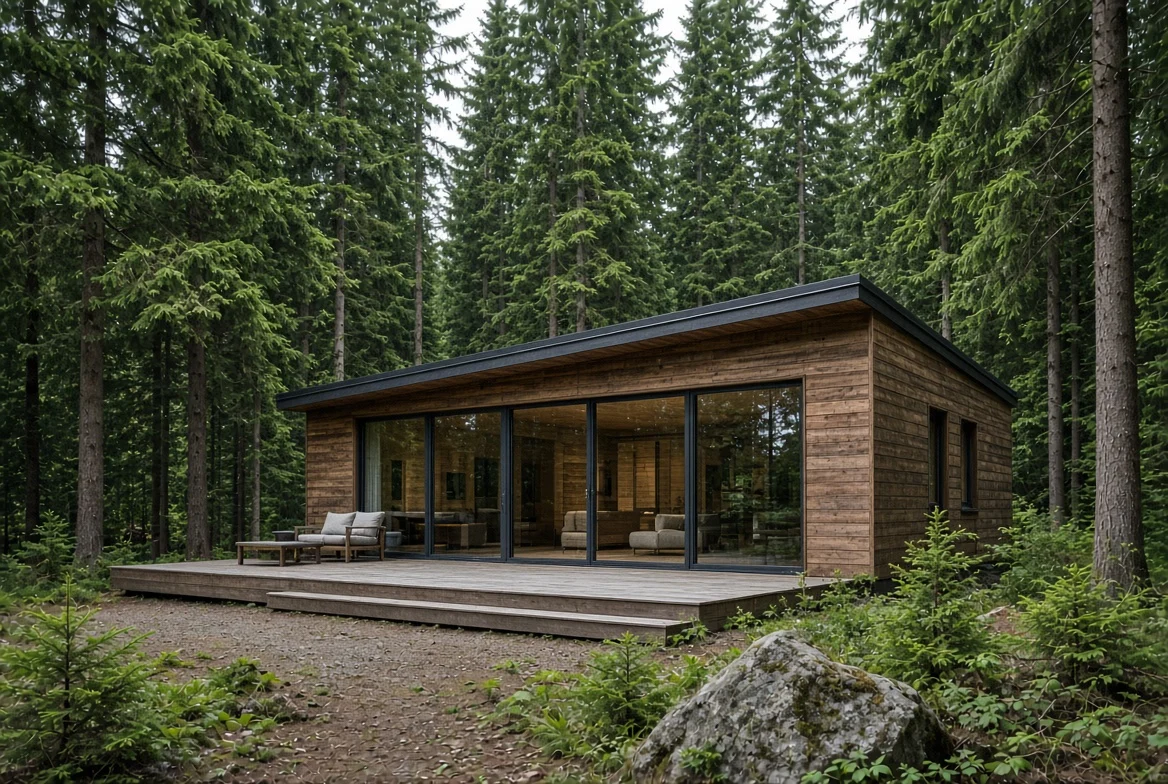
Wood was considered suitable for single-storey buildings by 61% of respondents in a Czech survey conducted in 2024. The share fell to 24.28% for buildings of two to four storeys and 13.13% for those of five or more storeys. The same material received substantially different assessments depending on building height.
The gap between the single-storey and tallest categories was 47.87 percentage points. This shows how closely public acceptance of wood is linked to its intended use. General attitudes towards a material and assessments of its suitability for a particular building capture different aspects of opinion.
What respondents assessed
The height results come from the OS 2024 survey of 1,000 adults aged 18 and over. Face-to-face interviews took place from 23 November to 3 December 2024. Respondents assessed the suitability of wood for buildings of different heights; the reported percentages combine “very suitable” and “rather suitable”.
Published in Cleaner and Responsible Consumption in 2025, the study placed these findings within three independent surveys conducted in 2018 and 2024, totalling 6,019 respondents. The surveys addressed material properties, applications and attitudes towards timber housing.
| Building height | Wood perceived as suitable |
|---|---|
| One storey | 61.00% |
| 2–4 storeys | 24.28% |
| 5 or more storeys | 13.13% |
Negative assessments also became more prevalent for taller buildings. Wood was rated rather or very unsuitable by 51.74% for two to four storeys and 70.05% for five or more. The balance of opinion therefore changed direction: positive answers predominated for single-storey buildings, while negative answers predominated in both taller categories.
Favourable associations coexist with technical concerns
The PAS 2018 survey of 1,519 people aged 15–75 documented strong favourable associations with the material. A total of 94.8% definitely or rather agreed that wood was natural. Positive ratings for appearance reached 92.7%, and those for a pleasant smell reached 92.8%.
Within the same sample, 93.9% agreed with the description of wood as flammable, 81.4% with susceptibility to pests, and 79.4% with the need for maintenance. Its public image therefore combined highly valued sensory characteristics with perceptions of technical and operational demands. Each characteristic was rated separately.
These answers describe perceptions of the material. For a specific building, fire resistance, durability and other properties are assessed at the level of the construction design. In interpreting their findings, the authors distinguish broad material associations from confidence in a particular building application.
Suitability also varies across familiar products
In OS 2024, 88.8% considered wood very or rather suitable for garden structures, 84.1% for doors and 75.1% for roof trusses. The corresponding share for windows was 54.5%. Differences therefore extended to common uses with which the public is familiar.
The wording of a question matters. In 2018, the survey asked about personal material preferences for particular uses; in 2024, it asked about perceived suitability. Someone may regard a material as suitable while considering a different option for their own purchase. The study distinguishes these formulations when comparing results.
Acceptance depends on the application
Together, the findings show why general appreciation of wood provides only part of the picture of timber-construction acceptance. Building height, intended use and question wording substantially change the distribution of answers. The contrast between 61% for single-storey buildings and 13.13% for buildings of five or more storeys illustrates the scale of that variation.
The research therefore gives greater precision to the discussion of public attitudes and concerns. Alongside positive associations, it matters which applications people consider suitable for the material. This provides a more specific account of confidence than a general question about whether people like wood.
Source
Riedl, M., Němec, M., Neužilová, L., Jarský, V., & Dudík, R. (2025). Consumer attitudes toward timber housing in the Czech Republic: Drivers and barriers for cleaner and responsible consumption transitions. Cleaner and Responsible Consumption, 19, 100364. Data: Tables 1–3, Figures 1–2 and RQ2 results summary. DOI 10.1016/j.clrc.2025.100364.
Sources for this story
Cleaner and Responsible Consumption
Consumer attitudes toward timber housing in the Czech Republic: Drivers and barriers for cleaner and responsible consumption transitions
Riedl, M., Němec, M., Neužilová, L., Jarský, V., & Dudík, R. (2025). Consumer attitudes toward timber housing in the Czech Republic: Drivers and barriers for cleaner and responsible consumption transitions. Cleaner and Responsible Consumption, 19, 100364. https://doi.org/10.1016/j.clrc.2025.100364
DOI 10.1016/j.clrc.2025.100364