A RESEARCH STORY · 3 MIN READ
Household mushroom and forest-fruit gathering: an estimated 31,000 tonnes worth CZK 7.3 billion
For the 2024 reference year, a study estimates Czech household collection at 21,447 tonnes of mushrooms and 9,781 tonnes of forest fruits. Their combined indicative value reaches EUR 290.69 million, quantifying a substantial source of household food provision.
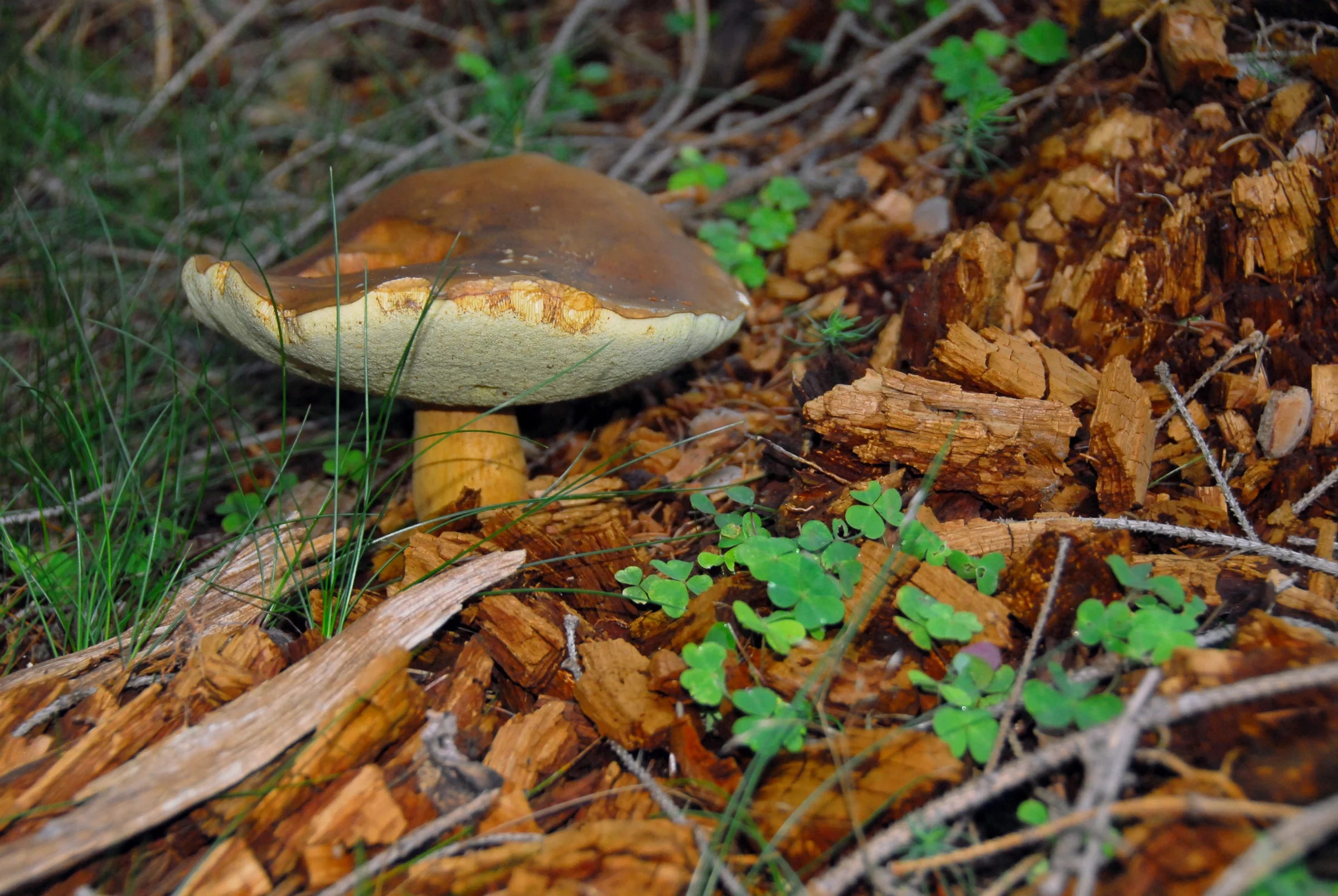
Czech household collection of mushrooms and forest fruits amounts to an estimated 31,228 tonnes of food in the study’s 2024 reference-year calculation. Published in Forests, the analysis assigns these products a combined indicative value of EUR 290.69 million. At the study’s conversion rate of CZK 25 per euro, this is approximately CZK 7.27 billion.
Mushrooms account for the largest component: 21,447 tonnes and EUR 199.89 million. Forest fruits contribute 9,781 tonnes and EUR 90.80 million. The monetary estimate values food acquired by households at the prices used in the research, extending the assessment of provisioning to products used directly within households.
How the national estimate was calculated
The authors combined surveys from 2021–2025 containing responses from 5,025 adults. Respondents reported quantities collected by their entire household. Mean annual collection was 4.690 kg of mushrooms and 2.139 kg of forest fruits per household. These averages include households reporting no collection.
The national calculation uses 4,572,922 households, based on the statistical figure selected for the 2024 reference year. Multiplying average quantities by that household count and converting kilograms to tonnes produces the total volumes. The result is a reference estimate based on reported household collection and the size of the household sector. The multi-year surveys provide a basis for estimating typical provisioning at national scale.
| Household collection | Estimated quantity (t) | Indicative value (EUR million) |
|---|---|---|
| Mushrooms | 21,447 | 199.89 |
| Forest fruits | 9,781 | 90.80 |
| Total (sum) | 31,228 | 290.69 |
Which fruits contribute most?
Blueberries dominate the recorded forest fruits. Their estimated 4,465 tonnes correspond to 0.976 kg per household and an indicative value of EUR 39.54 million. Raspberries follow at 2,201 tonnes and blackberries at 1,647 tonnes. Other recorded products include elderberries.
Product-level differences also matter for valuation. Each fruit has its own average quantity and unit price. The aggregate forest-fruit price is a weighted average of the individual prices. Total value consequently depends on both the amount gathered and the composition of the harvest: equal weights of different products can represent different monetary values.
What the CZK 7.3 billion figure represents
Indicative mushroom and fruit prices were derived from respondents’ reported knowledge of prices. The valuation approximates the monetary equivalent of food obtained through gathering. It captures the contribution of self-provisioning: an ingredient has economic value when a household consumes it, stores it or passes it to other people.
The study accordingly distinguishes household food acquisition, trade and value created at later processing stages. Gathering mushrooms and forest fruits constitutes a separate component of provisioning. Sales statistics capture another part of their movement through the economy. Interpreting the total contribution requires identifying which component a particular figure measures.
Game meat is valued at a different stage
The same paper includes game meat, estimating a 2024 supply of 17,044.5 tonnes in gross carcass-weight equivalent. Its indicative value at the primary procurement stage is EUR 33.57 million. The calculation uses hunting statistics, species-specific weight coefficients and procurement prices.
This physical unit describes the raw supply at the start of processing. Skinning, cutting, deboning, cooling and distribution follow, giving saleable meat cuts their own yields and prices. Mushrooms and forest fruits are valued as products gathered by households. The meaning of each monetary estimate therefore depends on the product, the physical unit and the stage in the supply chain.
The research quantifies direct food acquisition from forest environments while specifying how it can be valued. Combining quantities, prices and the form of use makes household gathering a measurable component of the economic contribution of forests.
Source
Riedl, M., Němec, M., Jarský, V., & Sloup, R. (2026). Supply, Trade and Consumption of Major Forest Foods in Czechia: Mushrooms, Forest Fruits and Game Meat. Forests, 17(7), 802. Sections 2.2, 2.4 and 3.4; Tables 6–8. DOI: 10.3390/f17070802.
Sources for this story
Forests
Supply, Trade and Consumption of Major Forest Foods in Czechia: Mushrooms, Forest Fruits and Game Meat
Riedl, M., Němec, M., Jarský, V., & Sloup, R. (2026). Supply, Trade and Consumption of Major Forest Foods in Czechia: Mushrooms, Forest Fruits and Game Meat. Forests, 17(7), 802. https://doi.org/10.3390/f17070802
DOI 10.3390/f17070802