A RESEARCH STORY · 4 MIN READ
What people want from forests: 85% agreement for undisturbed wildlife
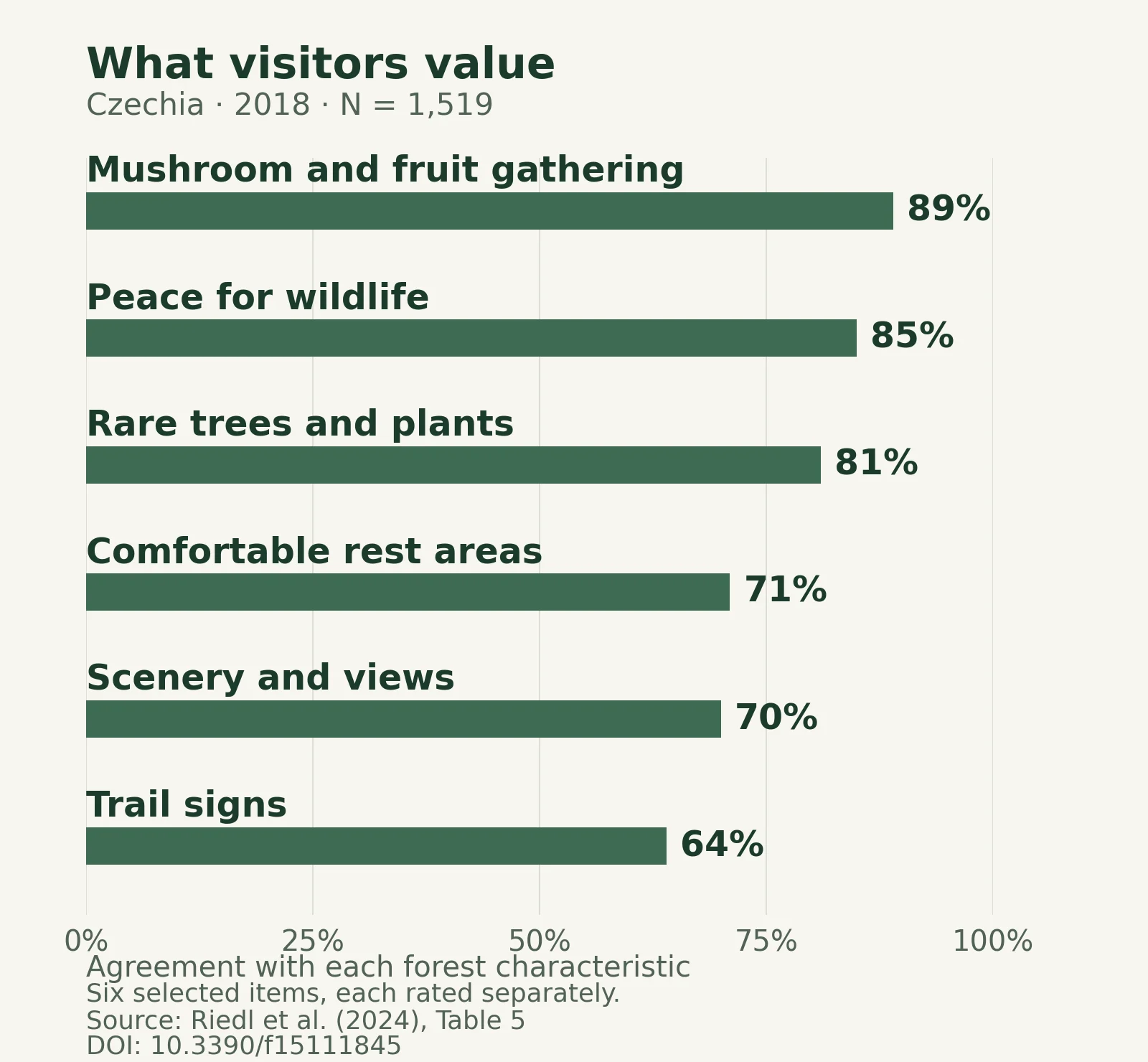
Undisturbed wildlife received 85% agreement, comfortable resting places 71%. A 2018 survey also found equal agreement for the presence of large predators and for keeping branches and cut timber clear of the woodland: 61%.
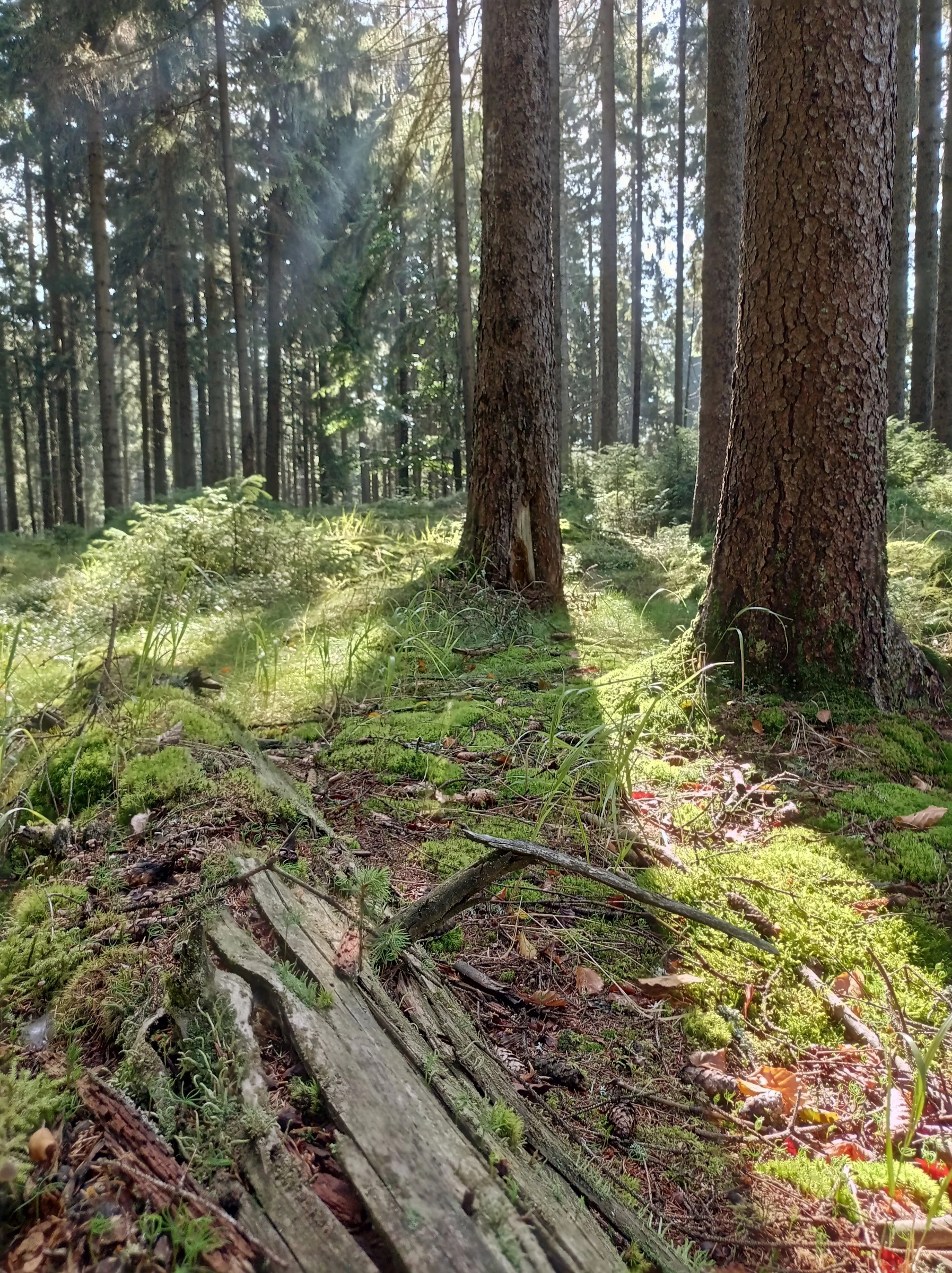
A forest where wildlife can remain undisturbed received 85% agreement in a Czech survey. Comfortable resting places received 71%. The difference was larger for strong agreement: 52% for undisturbed wildlife and 30% for resting places. Features associated with animal life therefore held a prominent position alongside facilities for visitors.
The survey included 1,519 people aged 15–75 and ran from 24 May to 4 June 2018. Marcel Riedl, Martin Němec and Vilém Jarský published the results in Forests in 2024. Respondents assessed eleven forest characteristics on a five-point scale. Each was rated separately, allowing agreement with several features at once.
Gathering, wildlife and rare plants
The opportunity to gather mushrooms and forest fruits attracted 89% agreement. Feeding stations, salt licks and similar provision for wildlife followed at 88%, undisturbed wildlife at 85%, and rare trees and plants at 81%. These shares combine strong and partial agreement.
High agreement therefore extended across different features: obtaining food, space for undisturbed animal life, rare plants and visible human intervention. Across the responses, both biological characteristics and some elements of forest management were rated positively.
Large predators: 61% agreement, 24% neutral
Forests where wolves, lynxes and bears live freely received 61% agreement. Of the respondents, 29% strongly agreed and 32% somewhat agreed. A neutral answer was selected by 24%, while 11% somewhat disagreed and 4% strongly disagreed.
Compared with the general description of undisturbed wildlife, large predators were associated with lower agreement and larger neutral and disagreement shares. For undisturbed wildlife, 13% were neutral and 2% disagreed. Naming particular animals was therefore accompanied by a different response distribution from the more general forest characteristic.
Similar totals can describe different expectations
Forests where branches and cut timber were not left between trees also received 61% agreement. Strong agreement was 28%, partial agreement 33%, neutrality 23% and combined disagreement 16%. The distribution closely resembled that for large predators, although the two items concerned different environmental features.
The matching percentages describe each item’s aggregate support within the sample. The table provides a separate response distribution for every feature. Reading the precise wording alongside the shares of strong, partial and neutral responses helps explain what each total represents.
Recreation and management in the same assessment
Romantic scenery and views received 70% agreement, adequate trail signs 64%. The presence of rare wild animals attracted 74%. Agreement with individual characteristics of the natural environment thus matched or exceeded that for some recreational features.
The survey used computer-assisted personal interviews and quota selection by gender, age, education, region and settlement size. Its findings describe the stated preferences of this sample in 2018.
That distinction matters when considering recreational use. Undisturbed wildlife, foraging, resting facilities and wayfinding represent separate requirements. The ecological consequences of management measures depend on local conditions; survey evidence adds information about their public acceptance.
Source
Riedl, M.; Němec, M.; Jarský, V. (2024). Thirty Years of Research on Ecosystem Services: The Socio-Economic Role of Forest Visits and Foraging in Enhancing Human Well-Being. Forests, 15(11), 1845, Table 5. DOI: 10.3390/f15111845.
Sources for this story
Forests
Thirty Years of Research on Ecosystem Services: The Socio-Economic Role of Forest Visits and Foraging in Enhancing Human Well-Being
Riedl, M., Němec, M., & Jarský, V. (2024). Thirty Years of Research on Ecosystem Services: The Socio-Economic Role of Forest Visits and Foraging in Enhancing Human Well-Being. Forests, 15(11), 1845. https://doi.org/10.3390/f15111845
DOI 10.3390/f15111845